
English
January 11, 2024 2026-02-02 18:57English


English Speaking Classes in Navi Mumbai


Why learn English with us?
Learnlanguages.store offers online and in-person group English classes for adults at all levels, from total beginner to advanced conversation. The English language is the most widely spoken language in the world. Not only is it spoken in many countries, but it’s also a global lingua franca. Learn English with a curriculum that provides the best English course available. Taught by professional native English teachers from across the globe, these classes are a great way to meet fellow English learners and build your English language skills. Our focus on conversational English will have you using and practicing the language from your very first lesson. Our English group classes meet twice a week for 120 minutes and are held offline at our Vashi, Navi Mumbai branch. You can also learn online on our iOS, Android, or website, allowing you to join one of our popular groups from anywhere in the world. We also offer regular English language workshops for students looking for a taste of the language and culture.
Learn The Essential Skills
Earn Certificates And Degrees
Get Ready for The Next Career
Master at Different Areas
English speaking courses taught by the world's English teachers

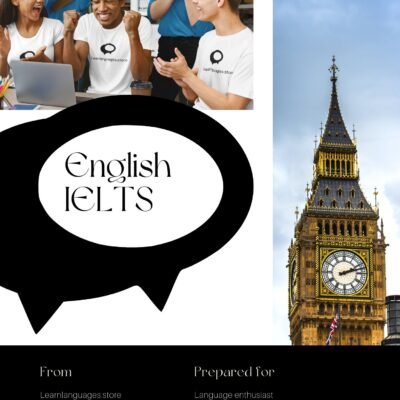
₹24,300.00₹32,300.00
IELTS Master Class Private (Express)


₹16,300.00
English Master Class Level 1/ 2/ 3
₹16,300.00₹24,300.00
IELTS Master Class
Best Moments






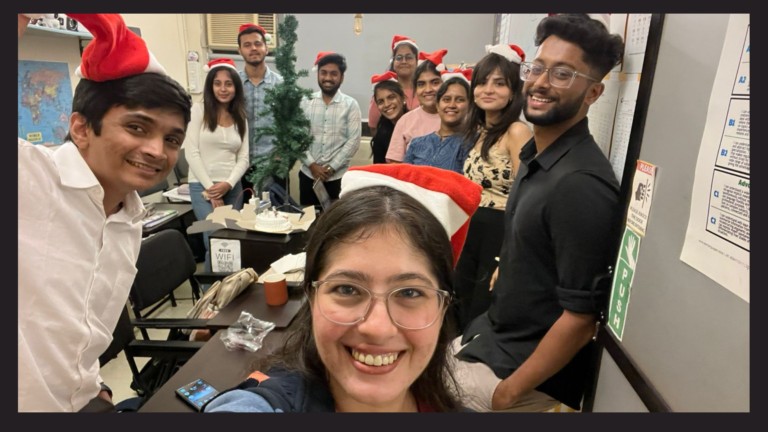


















You aren't in this alone

Top Rated class
We are a top-rated language school teaching English in Vashi Navi Mumbai and nationwide. Group and private lessons, adults and kids, schools, corporate, or film -no matter your level, we can help you achieve your English Speaking language goals.

Amazing learning Environment
A perfect environment that helps you learn more effectively compared to traditional classroom methods.

Online and offline learning
Learn on our IOS or Android mobile app or on our website. It has most advance language learning tools.

Courses from professionals around the globe.
Get teamed up with the specialists who work and teach languages for years at famous universities.
Flexible Scheduling
We offer flexible scheduling for both group and private lessons, allowing you to start your English classes at any time and at your convenience. You can choose to have them online or offline. We aim to help you learn English in a fun, engaging, and encouraging environment.
Intensive Learning
Our lessons are tailored to your specific goals and schedules, allowing you to learn English at the speed and level that suits you. These classes are ideal for targeted needs, such as applying for jobs in English-speaking countries, mastering business English, or preparing for graduate school entrance exams.
Transform your career
After finishing your language course, get your certificate from the Learn Languages Store. It will not only advance your career, but it will also improve your CV.


Frequently Asked Questions About English Classes & Courses

Why learn English?
Learning English has many benefits across the spectrum, from gaining cultural insight to enhancing business opportunities, from making lifelong friendships to traveling. In fact, there has never been a better time to learn English than today! Here are our 10 reasons to learn English:
Travel the World
The biggest benefit of learning English is that it opens up the world to you. Whether you’re visiting New York, London, or Sydney, knowing English allows you to explore these places more deeply and connect with locals. Even with basic speaking skills, locals will appreciate your effort and make your travel experience more enriching.
Discover Global Culture
English is the language of global culture, literature, and entertainment. From Shakespeare’s plays to Hollywood movies, knowing English gives you direct access to a vast array of cultural treasures. It allows you to dive deeper into world-renowned novels, films, TV shows, and music.
Enter the Global Business World
English is the dominant language of international business. Whether you’re working in finance, technology, or marketing, English proficiency will enable you to thrive in the global economy and expand your career opportunities.
Work Abroad
As the world becomes increasingly interconnected, many countries, including English-speaking ones, are seeking professionals who can communicate effectively in English. This demand opens up a wide range of job opportunities across the globe.
Boost Your CV
Learning English can significantly enhance your CV, making you a more attractive candidate for employers. It demonstrates your intellectual capacity and commitment to self-improvement, helping you stand out in a competitive job market.
It’s Easy to Get Started
While English can seem challenging, it’s easier to get started than you might think. Many learners can begin speaking basic English within a few weeks of study, and there are countless resources available to support your learning journey.
More Ways to Learn English than Ever
Gone are the days of dusty textbooks and outdated audio tapes. Today, there are countless modern tools and platforms, like language apps and online courses, that make learning English more accessible and enjoyable.
Communicate with Millions of People
English is spoken by over 1.5 billion people worldwide. By learning English, you gain the ability to communicate with people from all corners of the globe, opening up endless possibilities for personal and professional connections.
Make Friends Worldwide
Learning English helps you connect with people from diverse backgrounds, not just in English-speaking countries but around the world. It gives you the ability to build meaningful relationships across cultures.
Good Brain Exercise
Studies suggest that learning English, like learning any new language, is a great workout for your brain. It challenges your cognitive abilities, improving memory, problem-solving skills, and overall mental agility. Learning English can help keep your mind sharp and engaged.
Is English language really hard to learn?
Is English Really That Hard to Learn?
English is often described as a difficult language, sometimes one of the most difficult ones. This is not hard to understand. There are irregular grammar rules, confusing spellings, and a vast vocabulary! It must surely be impossible to learn for an adult non-native speaker!
You Can Learn English
That’s nonsense, of course. Naturally, if you’re aiming for a very high level, it will take time, but I have met many learners who have studied for just a few months (albeit very diligently) and have been able to converse rather freely in English after that time. Continue such a project for a year, and you will probably reach what most people would call fluent.
If you want more encouragement and factors that make English easier to learn, you should stop reading this article right away and check this one instead:
English is Actually Quite Hard
Does that mean that all the talk about English being difficult is just hot air? No, it doesn’t. While some learners can reach a decent conversational level in just a few months, others may find it takes longer to reach the same level in English compared to languages like Spanish.
Another way of looking at it is that English isn’t necessarily more difficult per step you have to take; it’s just that there are so many more steps compared to other languages, especially those closely related to your own. In this article, I will outline some of the main reasons why learning English is significantly harder than learning any other European language. Before we do that, though, we need to answer some basic questions:
Difficult for Whom?
The first thing we must get straight is: difficult for whom? It’s meaningless to say how difficult a language is to learn compared to others unless you specify who the learner is. The reason for this is not hard to understand. Most of the time spent learning a new language is used to expand vocabulary, get used to the grammar, master pronunciation, and so on. If you study a language that is close to your own, this task will be much easier.
For example, English shares a lot of vocabulary with other European languages, especially French. If you compare languages that are even closer, such as Italian and Spanish or Swedish and German, the overlap is much bigger.
My native language is Swedish, and even though I have never formally or informally studied German, I can still make sense of simple, written German and often understand parts of spoken German if it’s slow and clear. This is without even having studied the language!
Exactly how big an advantage this is doesn’t become clear to most people until they learn a language that has zero or almost zero overlap with their native language. For an English speaker, learning a language like Mandarin Chinese is a good example of this. There is almost no overlap with English vocabulary.
This is okay at first because common words in related languages are sometimes different too, but it adds up. When you get to an advanced level and there’s still no overlap between your own language and Mandarin, the sheer amount of words becomes an issue. We’re talking about tens of thousands of words that all have to be learned, not just modified a little bit from your native language.
After all, it’s not hard for me to learn many advanced words in English:
| English | Swedish |
|---|---|
| Political conservatism | Politisk konservatism |
| Supernova | Supernova |
| Magnetic resonance | Magnetisk resonans |
| Epilepsy patient | Epilepsipatient |
| Alveolar affricate | Alveolar affrikata |
Some of these are very logical in another language like French, and in that sense, learning them in French is actually easier if done from scratch compared to English or Swedish. However, that somewhat misses the point. I already know these words in Swedish, so learning them in English is really, really easy. Even if I only knew them in one language, I would automatically be able to understand them in the other. Sometimes I would even be able to say them. Guessing will sometimes do the trick!
It will never do the trick in Chinese.
So, for the purpose of this discussion, let’s focus on how difficult English is to learn for a native speaker of a non-English language, who may or may not have learned another language to some extent, such as French or Spanish. The situation will be almost the same for people in Europe who have learned English apart from their native languages.
What Does “Learn English” Mean? Conversational Fluency? Near-Native Mastery?
We also need to discuss what we mean by “learn English.” Do we mean to a level where you can ask for directions, book train tickets, and discuss everyday topics with native speakers? Do we include reading and writing, and if so, do we include handwriting? Or do we perhaps mean some kind of near-native educated level of competency, perhaps something similar to my level of English?
In another article, I discuss why learning English is actually not that hard if you aim for a basic level in the spoken language. To really flip the coin here, I will look at more advanced proficiency and include the written language. Some of the points here are relevant for beginners and the spoken language too, of course:
Vocabulary and Grammar: English has an enormous vocabulary, and many words have irregular spellings and pronunciations. The grammar rules can be tricky, and there are many exceptions to learn.
Speaking and Writing: As if learning thousands of vocabulary words isn’t enough, you also need to know how to pronounce them, which is not always related to how they are written. If you can pronounce Spanish as a native speaker of English, you can sort of write it too, at least if you learn some spelling conventions. Not so in English. Knowing how to say something tells you very little about how it’s written and vice versa.
Nothing for Free: I have already written about this above. If you haven’t learned English or any other language completely unrelated to your own, you don’t know how much you gain for free when you learn closely related languages. It’s difficult to estimate, but there’s a very big overlap between academic, medical, and technical terms in European languages. You have to learn all that from scratch in English.
Language Variation: English has many dialects and is spoken over a huge area by more than a billion people. There are differences in vocabulary, pronunciation, and usage across different regions, making it challenging to master all forms of the language.
Pronunciation and Accents: While basic pronunciation is relatively easy to get down if you have the right teacher and spend the necessary time, accents are really hard to master for most learners. In isolation, yes; in words, yes; but in natural speech without thinking too much about it, no. It’s really hard to feel the difference between words pronounced with different accents. Unless you are very talented, you will probably keep making pronunciation mistakes for the rest of your life. After a while, they won’t really disturb communication that much, but it takes a while and most students never get there.
Listening and Reading: In the article about why English is easy to learn, I listed several things that make it easier to speak, such as no gendered nouns, no verb conjugations for different tenses, and so on. However, this information is still present when you communicate; it’s just not encoded in the written or spoken language. The words look and sound the same. This means that it’s easier to speak because you don’t need to bother that much, but it makes listening and reading harder because you have less information and need to do much more interpreting yourself. Listening is further complicated by the fact that English has a very large number of homophones (words that sound the same but have different meanings), which makes it easy to mix things up.
Culture and Mentality: One of the major obstacles to reaching an educated native level in English is the huge amount of culture you don’t know about. If you study a European language like French, you share most of the cultural history and knowledge about the world with native speakers, and even though you need to fill in the gaps that are particular to that country, the general framework is the same. When most people start learning English, they may not know much about the English-speaking world. Can you imagine how long it takes as an adult to learn everything about the world that you know now through years of schooling, living in the country, reading newspapers, books, and so on? Added to this, the underlying thinking or mentality is sometimes very different. Humor doesn’t always work the same way, what an English person thinks is logical might not be logical to you, and cultural values, norms, and customs are different.
Does It Really Matter How Difficult It Is?
Now you might think that learning English is really impossible, but as I said in the introduction, that’s not really the case. However, as is the case with many other tasks, achieving mastery takes a long time. If you want to approach the level of an educated native speaker, we’re talking about a life-long commitment and a life situation that allows you to either work with the language or socialize in it.
I’ve studied English for many years, and I still encounter things I don’t know daily. I expect this will never stop. Of course, I have learned the language well enough to be able to listen, speak, read, and write about almost anything I want, including specialized and technical areas I’m familiar with.
Almost all learners would have settled for much less. And rightly so, perhaps. You don’t need to spend years or become an advanced learner for your studies to pay off. Even studying just a few months and being able to say a few things to people in English in their own language can make all the difference. Languages are not binary; they don’t suddenly become useful at a certain level. Yes, they become gradually more useful the more you know, but exactly how far you want to go is up to you. It’s also up to you to define what “learning English” means. Personally, I also think that the amount of things I don’t know about the language makes learning more interesting and fun!
How many people speak English language?
Standard English: A Global Language
Standard English, often referred to simply as English, is the official language of numerous countries, including the United States, the United Kingdom, Canada, Australia, and New Zealand. It is believed that there are hundreds of living languages in the world today, but English is the most widely spoken and studied. English serves as a common language for communication among people from different linguistic backgrounds.
Varieties of English
In different regions, English has its own local variations. In the United States, it is commonly known as American English, while in the United Kingdom, it is referred to as British English. In countries like Australia and New Zealand, it is known as Australian English and New Zealand English, respectively. These variations include differences in vocabulary, pronunciation, and even grammar.
Standard English Across the World
The Standard English used in many countries is regulated by institutions such as the Oxford English Dictionary in the UK and Merriam-Webster in the US. In many countries, English is taught in schools and is used as the primary language of instruction. English is one of the six official languages of the United Nations (UN). It is spoken by millions of people around the world as a native or second language.
Global Influence of English
English has played a significant role in shaping the languages and cultures of many countries around the world. It is the language of international business, science, technology, and aviation, making it essential for global communication. English is spoken as a native language by millions of people and is used as a second language by many more. Its influence can be seen in countries across the Americas, Europe, Oceania, and Africa.
Countries That Speak English
English is the official language of the United States, the United Kingdom, Canada, Australia, and New Zealand. It is also widely spoken in countries such as India, South Africa, Nigeria, and the Philippines. Additionally, English is commonly spoken in countries with large expatriate communities, such as the United Arab Emirates, Singapore, and Hong Kong. For example, the United States has a significant population of English speakers, with high concentrations in cities like New York and Los Angeles. In global cities like New York, English is the dominant language, although other languages are also spoken.
Conclusion
English is a truly global language, spoken by millions around the world. Whether as a first language, second language, or even as a foreign language, its influence is far-reaching and continues to grow in importance.
Is learning English a great career move?
Get to know English along with another language like French, and it will provide you with an edge and advantage in the international job market.
It will open new doors for you to companies in English-speaking countries and other parts of the world. English is the global language of business, spoken in some of the world’s largest and most influential economies, making it a crucial tool for foreign investment and international opportunities.
Knowing English can also help you gain a richer and well-rounded education. Many of the world’s top universities are in English-speaking countries, and fluency in English helps you overcome the challenges of studying abroad. Knowledge of a global language like English will make you stand out when you begin applying for jobs.
The impressive lineup of international organizations where English is used officially is well-known. English is a working and official language of the United Nations, the European Union, UNESCO, NATO, the International Olympic Committee, the International Red Cross, and international courts.
What is IELTS
The IELTS exam consists of four separate sections: Listening, Reading, Writing, and Speaking. There are two types of IELTS tests: IELTS Academic and IELTS General Training. The Academic test is intended for those who want to pursue higher education in an English-speaking country, while the General Training test is for those who want to work, migrate, or gain work-related training in an English-speaking environment.
IELTS Exam Structure:
- Listening: 30 minutes, 40 questions
- Reading: 60 minutes, 40 questions
- Writing: 60 minutes, 2 tasks
- Speaking: 11-14 minutes, face-to-face interview
IELTS Scoring: The IELTS exam is scored on a band scale of 1 to 9, with each section receiving a score. The overall band score is an average of the four section scores. Here’s a general overview of what the band scores mean:
- Band 9: Expert User – Fully operational command of the language.
- Band 8: Very Good User – Fully operational command with only occasional unsystematic inaccuracies.
- Band 7: Good User – Operational command with occasional inaccuracies and misunderstandings.
- Band 6: Competent User – Effective command with some inaccuracies and misunderstandings.
- Band 5: Modest User – Partial command with many inaccuracies.
- Band 4: Limited User – Basic competence is limited to familiar situations.
- Band 3: Extremely Limited User – Conveys and understands only general meaning.
- Band 2: Intermittent User – No real communication is possible.
- Band 1: Non-User – Essentially has no ability to use the language.
Purpose of IELTS: IELTS is widely recognized by universities, employers, immigration authorities, and professional bodies across the globe. It is a requirement for those who wish to study or work in countries where English is the primary language of communication, such as the United States, United Kingdom, Canada, Australia, and New Zealand.
Test Formats:
- IELTS Academic: For those applying to study in higher education or seeking professional registration.
- IELTS General Training: For those who are going to English-speaking countries for secondary education, work experience, or training programs.
Why Take IELTS? Achieving a good IELTS score can help you gain admission to universities, improve your job prospects, or fulfill immigration requirements. It is recognized by over 10,000 organizations worldwide, making it a key qualification for anyone aiming to excel in an English-speaking environment.
What is TOEFL?
TOEFL Exam Structure:
The TOEFL test is divided into four sections, each focusing on one of the core language skills:
Reading:
- Duration: 54-72 minutes
- Number of Questions: 30-40
- Task: Reading passages from academic texts and answering questions.
Listening:
- Duration: 41-57 minutes
- Number of Questions: 28-39
- Task: Listening to lectures, discussions, and conversations, and answering questions.
Speaking:
- Duration: 17 minutes
- Number of Tasks: 4 tasks
- Task: Speaking on a familiar topic, as well as on material read and listened to, and expressing an opinion.
Writing:
- Duration: 50 minutes
- Number of Tasks: 2 tasks
- Task: Writing essays based on reading and listening tasks, as well as supporting an opinion in writing.
TOEFL Scoring:
Each section of the TOEFL test is scored on a scale of 0-30, making the total score range between 0-120. Here’s a brief overview of the scoring:
- Reading: 0-30
- Listening: 0-30
- Speaking: 0-30
- Writing: 0-30
The total score is the sum of the scores from the four sections. Different institutions may require different minimum scores for admission, typically ranging from 70 to 100 or more, depending on the program and institution.
Purpose of TOEFL:
TOEFL is primarily used by universities and colleges to assess the English proficiency of applicants whose first language is not English. It is also used by immigration departments to issue resident visas and by medical and licensing agencies for professional certification purposes.
Test Formats:
TOEFL iBT (Internet-Based Test): This is the most common format, administered via the internet at designated test centers. It is the preferred format by most institutions.
TOEFL PBT (Paper-Based Test): This is a less common format and is only available in locations where the internet-based test is not accessible. The PBT format does not include a Speaking section.
Why Take TOEFL?
Taking the TOEFL test can help you meet the English language requirements for university admissions, scholarships, or professional certifications. It is accepted by more than 11,000 universities and institutions in over 150 countries, making it a key qualification for students and professionals aiming to study or work in an English-speaking environment.
What is the Duolingo English Test?
Duolingo English Test Structure:
The Duolingo English Test is divided into several sections, each assessing different aspects of language proficiency:
Adaptive Test:
- Duration: Approximately 45 minutes
- Task: This section evaluates reading, writing, listening, and speaking skills through a variety of question types, such as word completion, sentence construction, and comprehension tasks.
Video Interview and Writing Sample:
- Duration: Approximately 10 minutes
- Task: In this section, test-takers respond to open-ended questions. The video interview involves speaking on a given topic, while the writing sample requires the test-taker to write about a specific topic. Both parts are sent to institutions along with the test score.
Duolingo English Test Scoring:
The Duolingo English Test is scored on a scale of 10 to 160, with increments of 5 points. The score reflects the test-taker’s overall English proficiency, and the scores are aligned with the Common European Framework of Reference (CEFR) levels:
- 10-55: Basic (A1-A2)
- 60-85: Intermediate (B1)
- 90-115: Upper Intermediate (B2)
- 120-160: Advanced (C1-C2)
Purpose of the Duolingo English Test:
The Duolingo English Test is accepted by thousands of universities and institutions worldwide as proof of English proficiency. It is often used by students applying for higher education programs, scholarships, or other academic opportunities in English-speaking countries.
Advantages of the Duolingo English Test:
- Accessibility: The test can be taken from home, and all you need is a computer with a webcam, microphone, and a stable internet connection.
- Affordability: The Duolingo English Test is typically less expensive than other standardized tests like TOEFL or IELTS.
- Convenience: The test results are available within 48 hours, and the scores can be sent directly to institutions without any additional cost.
Why Take the Duolingo English Test?
The Duolingo English Test is a great option for students and professionals who need a flexible, affordable, and quick way to demonstrate their English proficiency. It is recognized by many academic institutions, making it a valuable tool for gaining admission to universities or fulfilling language requirements for various programs.
How long do the IELTS preparation courses last?
The duration of IELTS preparation courses can vary depending on the course provider, the intensity of the program, and the level of proficiency of the students. Here are some common options:
Intensive Courses:
- Duration: 2 to 4 weeks
- Description: These courses are designed for students who need to prepare for the IELTS exam in a short amount of time. They often involve several hours of study each day, covering all sections of the exam with a focus on exam strategies and practice.
Standard Courses:
- Duration: 6 to 12 weeks
- Description: These courses offer a more balanced approach, allowing students to build their skills gradually. Classes might be held a few times a week, making it suitable for those who are working or studying full-time.
Extended Courses:
- Duration: 3 to 6 months or longer
- Description: Extended courses are ideal for students who start at a lower proficiency level and need more time to prepare. These courses offer in-depth instruction on language skills and test-taking strategies.
Custom/Private Tutoring:
- Duration: Flexible, based on individual needs
- Description: Private tutoring allows for a personalized study plan that can be adjusted to fit the student’s schedule and goals. This option is often used by students who need to focus on specific areas of the IELTS exam.
Note: Some preparation courses also offer mock tests or practice exams as part of the program, which can help students gauge their progress and readiness for the actual IELTS exam. The length of time needed for preparation also depends on the student’s starting level and target score.
How long do the TOEFL preparation courses last?
The duration of TOEFL preparation courses can vary depending on the course provider, the intensity of the program, and the student’s initial proficiency level. Here are some typical options:
Intensive Courses:
- Duration: 2 to 4 weeks
- Description: These courses are designed for students who need to prepare for the TOEFL exam quickly. They often involve several hours of study each day, focusing on all sections of the exam with an emphasis on strategies, practice tests, and quick skill improvement.
Standard Courses:
- Duration: 6 to 12 weeks
- Description: These courses provide a more paced approach, allowing students to develop their skills over a couple of months. Classes may be held a few times a week, making it suitable for those who need to balance preparation with other commitments like work or school.
Extended Courses:
- Duration: 3 to 6 months or more
- Description: Extended courses are ideal for students starting at a lower proficiency level who need more time to prepare thoroughly. These courses cover all aspects of the TOEFL exam in-depth, with plenty of time for practice and improvement.
Custom/Private Tutoring:
- Duration: Flexible, depending on individual needs
- Description: Private tutoring allows students to tailor the preparation to their specific strengths and weaknesses. The course length can vary based on how much time the student needs to achieve their target score.
Note: The length of time needed for preparation depends on the student’s current English proficiency, their target TOEFL score, and how much time they can dedicate to studying. Many courses also include practice tests, which can help students assess their readiness for the actual exam.
Why is English a rewarding language to learn despite its difficulties?
Simpler Aspects of Learning English
- Grammar
English grammar, while having its complexities, is relatively straightforward in certain areas. Unlike languages with complex verb conjugations, English verbs do not change as much depending on the subject. For example, the verb “to be” changes slightly depending on the subject, but many other verbs remain the same:
- I play
- He/She/It plays
- They play
This consistency can be easier for learners, especially when compared to languages with extensive verb conjugations.
- Vocabulary Borrowings
English has borrowed words from many different languages over the centuries, which means that learners often come across familiar words. For example, many English words are borrowed from Latin, French, and German, which can make vocabulary acquisition easier for speakers of those languages.
- Construction/Structure
English sentence structure follows a relatively simple Subject-Verb-Object (SVO) order. This makes it easier for learners to construct basic sentences. Additionally, English does not have gendered nouns or as many verb conjugations as some other languages, simplifying the learning process.
- Global Prevalence
One of the biggest advantages of learning English is its global prevalence. English is spoken as a first or second language in many countries, and there are countless resources available for learners. This widespread use means that English learners can easily find opportunities to practice and improve their skills, whether through media, online communication, or travel.
Difficult Aspects of Learning English
- Irregularities in Spelling and Pronunciation
One of the most challenging aspects of English is its irregular spelling and pronunciation. Unlike languages with more consistent phonetic rules, English words are often not spelled the way they sound. This can be confusing for learners, as there are many exceptions to the rules.
For example:
- “ough” can be pronounced differently in words like “though,” “through,” “bough,” and “cough.”
- Phrasal Verbs
English is full of phrasal verbs—verbs combined with prepositions or adverbs that change the verb’s meaning. These can be tricky for learners because they often have meanings that are not immediately obvious from the individual words.
For example:
- “Look up” can mean to search for information.
- “Give up” means to quit or stop trying.
- Idiomatic Expressions
English is rich in idiomatic expressions, which can be difficult for learners to understand because their meanings are not literal. These expressions can vary greatly by region and can make comprehension challenging, even for advanced learners.
For example:
- “It’s raining cats and dogs” means it’s raining heavily.
- “Bite the bullet” means to endure a painful experience.
- Pronunciation and Accent Variation
English pronunciation varies widely across different regions, making it challenging to master. Learners may struggle with understanding different accents, and the same word can be pronounced differently depending on where it’s spoken.
For example:
- The word “route” can be pronounced as “root” or “rowt” depending on the region.
So, Is English Hard to Learn?
English may seem challenging at first, especially with its irregularities and idiomatic expressions. However, many non-native speakers find that with practice and exposure, English becomes more manageable. Its global use and the vast array of learning resources available make it a rewarding language to learn, offering numerous opportunities for personal and professional growth.
Master International Exams with our Expert Training








Download our app
Learn English on your mobile anytime!
Connect with fascinating people from around the world to master a new language skill, cultivate new perspectives.





See What Our Students Have To Say
just learnt french and my experience was amazing

 Jay Gala
January 22, 2022
Their teaching techniques is fab. Helped me learn french and it was soo much fun
 manali shidge
January 22, 2022
Would you want to study German using the internet? Learnlanguages.store is the option I believe would be best for you to pursue. In this situation, everything, including the time that... read more we should choose and what is most convenient for us, is our top priority. Everyone in our community is helpful and knowledgeable. My overall impression of this institution is quite positive. Strongly Suggested to Each and Every Person. Classes in German offered by the best teachers in Vashi and Navi Mumbai
 Dipti Jadhav
September 1, 2022
Our Methods
At Learnlanguages.store, we're dedicated to teaching languages authentically. Whether it's French, Spanish, German, or any other language, we prioritize real-life conversation, informal interactions, and strong grammar foundations for effective communication and cultural immersion. Join us for a holistic language learning experience.
TAUGHT BY LANGUAGE EXPERTS
SMALL CLASS SIZE
PROVEN COURSE CONTENT
Learnlanguages.store News
From Learnlanguages.store to the world



We're always eager to hear from you!
Our ultimate goal is to give everyone access to a private and group class experience online or offline with the most advanced technology. Everyone learns in different ways.
Hour of operation
Sunday & Saturday: 9:00 - 19:30