
Mastering Japanese Grammar: Understanding 〜かわりに (kawari ni)


Estimated reading time: 3 minutes
Introduction:
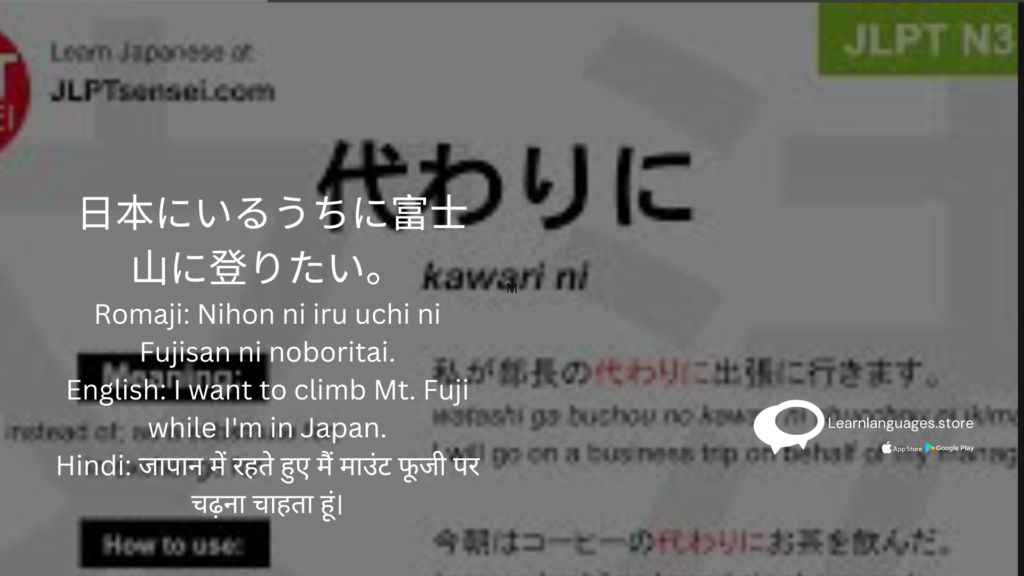
In Japanese grammar, “〜かわりに (kawari ni)” is a versatile expression used to indicate a substitution or replacement. It’s a crucial structure for expressing alternative choices or actions in various contexts.
Examples:
- Example 1:
- Japanese: 彼はコーヒーを飲むかわりに、お茶を頼んだ。
- Hindi: उसने कॉफ़ी पीने के बजाय, चाय माँगी।
- Pronunciation: Kare wa koohii wo nomu kawari ni, ocha wo tanonda.
- Romaji: He ordered tea instead of coffee.
- Example 2:
- Japanese: この本が高いかわりに、内容がとても良いです。
- Hindi: इस किताब की बढ़ीमूल्य होने के बदले, इसका सामग्री बहुत अच्छी है।
- Pronunciation: Kono hon ga takai kawari ni, naiyou ga totemo ii desu.
- Romaji: Despite this book being expensive, its content is very good.
- Example 3:
- Japanese: 彼女は犬を飼うかわりに、猫を飼い始めた。
- Hindi: उसने कुत्ते पालने की बजाय, बिल्ली पालना शुरू किया।
- Pronunciation: Kanojo wa inu wo kau kawari ni, neko wo kaihajimeta.
- Romaji: Instead of getting a dog, she started to raise a cat.
Sentence Structure:
The structure “〜かわりに (kawari ni)” is used after a noun or verb stem to indicate what is being substituted or replaced, followed by the alternative choice or action.
Exceptions and Usage:
- Exceptions: There are no strict exceptions in usage, but it’s important to note that “〜かわりに (kawari ni)” implies a direct substitution or replacement.
- Usage: It can be used in various situations, such as expressing choices, preferences, or unexpected changes in plans.
Conclusion:
Mastering the use of “〜かわりに (kawari ni)” expands your ability to express alternatives and substitutions effectively in Japanese. Practice using it in everyday conversations to become more fluent and natural in your Japanese communication.
By incorporating “〜かわりに (kawari ni)” into your language arsenal, you enhance your proficiency in Japanese grammar and enrich your ability to express nuanced meanings. Keep practicing and exploring different contexts to solidify your understanding of this versatile grammar structure.
Learn Languages Store
Vashi,
Email: services@learnlanguages.store